
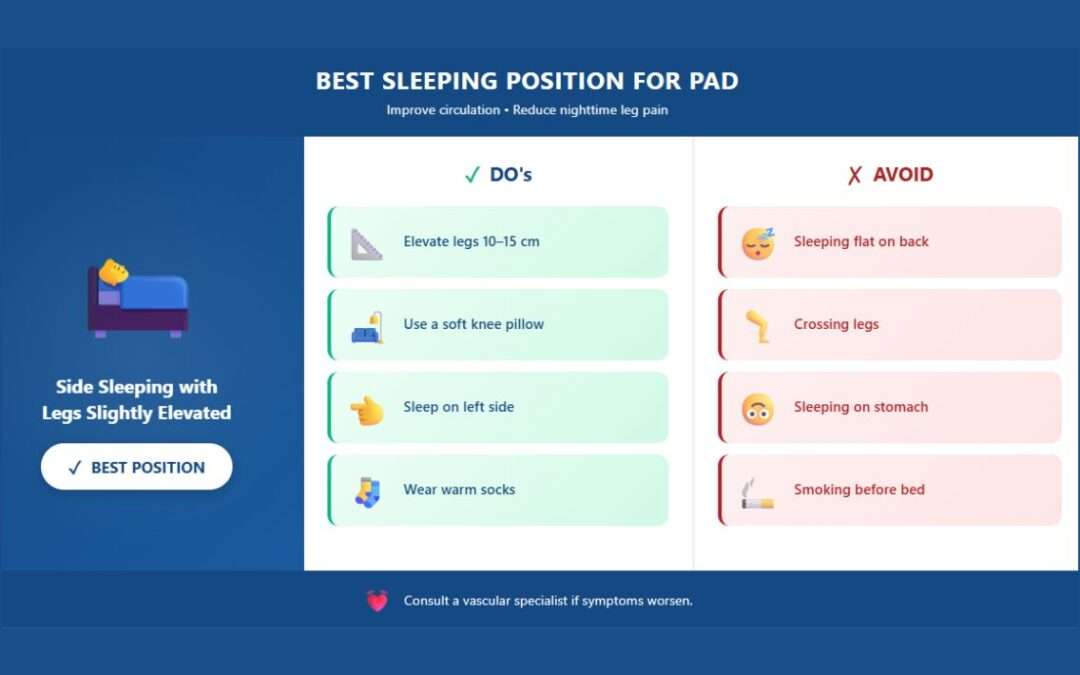
If you have Peripheral Artery Disease (PAD), nights can be the hardest part of your day. The pain, numbness, tingling, and restless legs often get worse when you lie down making sleep feel almost impossible.
Here’s the good news:
The right sleeping position can significantly reduce PAD symptoms and improve overnight blood flow.
In this guide, you’ll learn the best sleeping positions for PAD, the science behind them, and practical nighttime habits that make a real difference.
Let’s dive in.
What Makes PAD Symptoms Worse at Night?
PAD happens when arteries that carry blood to your legs become narrowed. At night, circulation naturally slows down and if your arteries are already restricted, your legs don’t get enough oxygen rich blood.
This causes:
- Aching or cramping in legs
- Burning sensations
- Cold feet
- Numbness or tingling
- Severe “rest pain” that wakes you up
The right positioning helps improve blood flow, reduce pressure, and calm these symptoms while you sleep.
The Best Sleeping Positions for Peripheral Artery Disease
Not all sleeping positions help PAD but some work surprisingly well. Here are the best options, ranked by effectiveness.
1. Sleep With Your Legs Elevated (Best for Rest Pain)
If PAD symptoms get intense when you lie flat, this position is a game changer.
Why it works:
Elevating your legs helps gravity improve blood flow back to your heart. It reduces pressure, helps oxygen circulate, and decreases swelling.
How to do it:
- Lie on your back.
- Place 1–2 pillows under your legs or use a wedge pillow.
- Aim for 6–12 inches of elevation, but stay comfortable.
Pro tip:
Make sure your knees are slightly bent straight elevation can strain your hips and lower back.
2. Side Sleeping With a Pillow Between Your Legs
If you’re not a back sleeper, this is the next best position.
Why it works:
- Keeps spine aligned
- Reduces pressure on arteries
- Improves circulation to the lower legs
- Prevents legs from rubbing, which can trigger pain
How to do it:
- Sleep on your left or right side.
- Place a pillow between your knees to reduce tension.
This position works especially well for people with back pain or hip discomfort.
3. Back Sleeping With Knees Slightly Raised
If full elevation is uncomfortable, this modified version still helps.
Why it works:
- Slight knee elevation reduces tension on lower back
- Improves blood flow without over elevating
- Good for people with sleep apnea or acid reflux too
How to do it:
- Lie on your back.
- Place a rolled towel or thin pillow under your knees.
Sleeping Positions to Avoid (Important)
Some sleeping positions can worsen PAD symptoms avoid these if possible:
❌ Stomach Sleeping
Pressures arteries + twists spine.
❌ Legs Hanging Off the Bed
Reduces circulation + increases risk of swelling.
❌ Sleeping in a Cold Room Without Warm Socks
Cold constricts blood vessels and reduces leg blood flow.
The Science Behind Sleep & Circulation (Simple Breakdown)
PAD restricts arteries, meaning your legs don’t get the oxygen they need. When you lie down:
- Blood pressure drops slightly
- Heart rate slows
- Reduced activity = slower circulation
That’s why gravity based positioning (like elevation) becomes so important.
Research shows that elevating the legs and keeping warm improves arterial blood flow and even reduces nighttime “rest pain.”
Nighttime Habits That Improve PAD Symptoms
Sleeping position is just one part. Here are simple habits that dramatically improve circulation.
1. Warm Foot Soak Before Bed
Encourages blood flow and calms muscle tension.
2. Light Leg Stretching
A 5 minute routine can reduce cramping and stiffness.
3. Wear Warm Socks
Cold slows artery flow. Warmth = dilation.
4. Avoid Nicotine & Caffeine Late in the Day
Both constrict arteries and worsen nighttime cramps.
5. Stay Hydrated
Dehydration thickens blood and reduces circulation.
6. Use a Mattress That Supports Your Spine
A sagging mattress affects circulation more than people think.
When to See a Doctor (Don’t Ignore These Signs)
If you experience any of these during the night, seek medical help soon:
- Constant or severe rest pain
- Feet that look pale, blue, or cold
- Wounds on legs or toes that are not healing
- Sudden pain with leg coldness (emergency)
- Increasing numbness or weakness
PAD can progress early treatment makes a massive difference.
Ready to Take Control of Your Heart & Vascular Health?
At CardioVascular Care Center, we provide advanced, comprehensive heart and vascular services from diagnostic testing to minimally invasive treatments all designed to keep you healthy, active, and protected from life threatening complications.
Whether you’re dealing with leg pain, varicose veins, chest discomfort, circulation problems, or simply need a specialist’s evaluation, our expert cardiology & vascular team is here to help.
Visit Us at Our Convenient Location
Cardiology and Vascular Care Center
3115 Harbor Blvd, Port Charlotte, FL 33952
Need an Appointment or Have Questions?
Call us at: 941 258 3635
Our friendly staff will guide you, schedule your visit, and help you get the right treatment tailored to your condition.
Don’t Wait Your Heart & Vascular Health Matters
Early diagnosis and timely care can prevent serious complications like heart attack, stroke, and artery blockages.
Take the first step toward better health today.
Book your appointment now and get the expert care you deserve